27 January 2017
Digital Advertising in 2017: Elephant in the room?
The juggernaut of Digital Advertising continues to roll ahead, undeterred by skeptics & naysayers who are questioning if brands have over-invested already, in the medium. As we cross the chasm of adoption and enter the eye of the tornado, 2017 will provide the perfect space and time for a little reflection. The story of six blind people describing an elephant has an interesting parallel in the world of digital advertising. Depending on the vantage point of the experts we have been deluged by technobabble around Search, Social, Videos, Mobile, Native and Programmatic — throw in a couple more in the room and now you have programmable (distinct from programmatic) and AI to add on to the ever growing list of stuff that makes up digital advertising.
Over the next 5 minutes or so of your reading time, I will attempt to separate the wheat from the chaff — so you know what works now, and what needs fixing in 2017. I will also cover some neat stuff that you must experiment with, and hype that you can give a skip. If you manage to reach the end of the article, hopefully you can take away some actionable ideas for effective digital advertising.
Inside the Tornado
But first some numbers to set the context. The digital advertising spend numbers in India is forecasted to breach the $1B milestone in 2016–17. There is a lot of headroom for growth, when you look at the rapidly growing smartphone consumer base over next 5 years — projected to rise 4X up to 820M. A more compelling indicator for digital spends that can ride this wave, is the uptick in data consumption; climbing up at a CAGR of 30% and projected to reach 7GB/month (per active user) by 2021 (as per the Ericsson Mobility Report of 2016). So why does digital spending in India still stand at a minuscule 15% of the total advertising pie, quite unlike the 40 + percent share in evolved markets. Where is the problem?
I believe that the advertising model for digital in India is fundamentally broken. Very little responsible action has been taken by publishers and media agencies and to some extent even clients, rendering a large part of such a potent medium, ineffective.
Digital Advertising is all about effectiveness — and we all grew up to understand this is the ONLY medium that has the power to deliver the relevant signals from consumers. And yet, in the limited buying exercises we conducted in 2016, we saw publishers turning a blind eye to traffic quality and relevance of audience profile. Unfathomable performance metrics and targeting parameters are spun out as yarns, which many clients fall for hook, line and sinker.
What works now? Separating the wheat from the chaff.
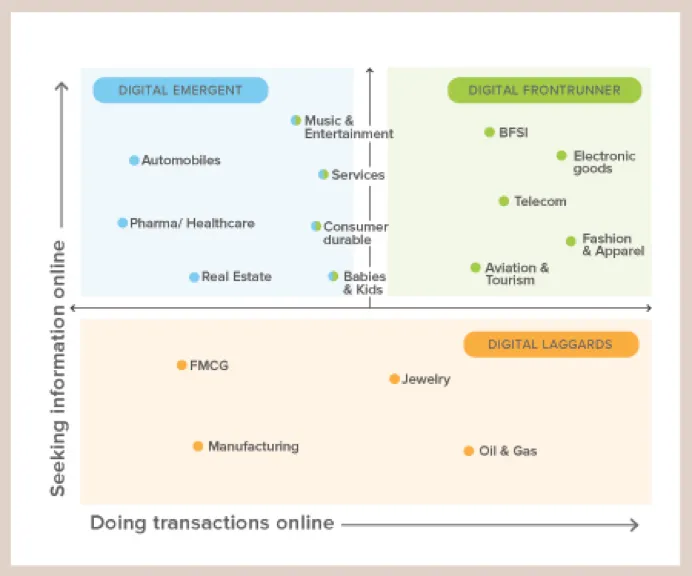
Search will continue to reign strong over display though it has limitations to deliver scale. For categories that score high on ‘digital influence’ (consumers researching online) and ‘digital density’ (consumers buying online), measuring intent is ‘key’ — and search will be simply unbeatable when it comes to capturing intent laden traffic emanating on the horizontal screen.
Content will be the game changer when it comes to categories that are digital emergent and score low on both influence and density. Brands that will consistently invest in content will be ahead of others in the race to influence the influencers. A leading few will be able to articulate a vision leveraging such content for communities and launch their brand-as- a-service to fulfil some need gaps.
Mobile is the tricky part to understand. While time spent on the vertical screen is witnessing inexorable rise, the platform choice is influenced by content, and behavior is heavily skewed to messaging, social, entertainment and news. Time Spent using the mobile browser is more than native Apps in developing economies, and India is no exception as local research suggests. Advertising choices on the Mobile are thus far more compelling yet terribly complex.
Native Advertising in my opinion makes the best sense of all available options backing search, especially for brands investing heavily in content. Forecasts that indicate this format reaching as high as 75% (of total display advertising) in mature markets like USA, back my gut feel and makes complete sense as of now. But where does native work best — social, in-publisher feed or sponsored content? Tough question that can best be answered by the format of advertising you chose.
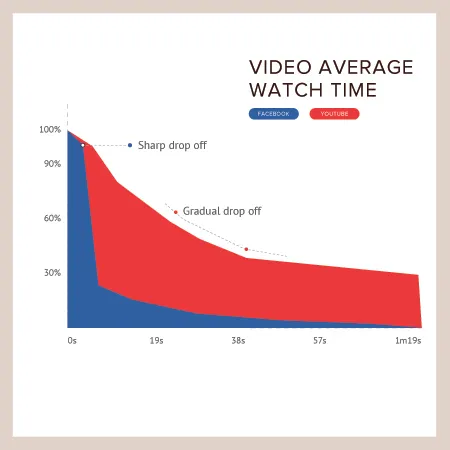
Videos have a really really bad track record on Social and Facebook has been struggling to revise recommended metrics of meaningful video consumption. Certainly Facebook scores over any other platform in its innate ability to spread content, but when it comes to video the numbers have to taken with a pinch of salt. In fact for advertising content (including brand story telling) delivered via video, I have found YouTube to return far more tangible value. Shares are a great number to flaunt on social, but barring the outliers, the effectiveness of advertising views is extremely poor when you have little control on how your content spreads. Not everyone who shares your video actually watches it completely.
What needs fixing in 2017?
What needs fixing is clarity over what large publishers are throwing at our face in terms of targeting — whether it is “audience in-market” or “audience insights”. We are accepting many such publisher definitions at face value, and there is no vehicle for grievance redressal when the performances don’t match up to the promise.
Viewable impressions (and related discussions on AD fraud) have just started being addressed with new technologies, and this needs strong push in the coming years. What needs terribly urgent fixing and nearer home, is end of blatant corruption by some publishers who outsource traffic generation to farms (both human and bots), and media agencies that hand-in- glove push bulk-buys from such publishers. Clients have to take a fair share of responsibility for landing the industry in this mess, because they refuse the pay the required service fees to an agency to run digital media “with brains”. The bulk buying metrics that work for mainline media are applied to digital, by old school media buyers; and at 3% commissions with no accountability on performance, everyone just ends up pulling a fast one on each other.
At the end of the day, it is simple for you to examine traffic quality, to arrive at our own conclusions about who is clean and who is tainted. Which platform was more effective for ‘completed videos views’? Did the high number of shares on your contagious content reach the targeted audience? What percentage of the traffic on your website disappeared under 10 seconds? You have to start asking the hard questions yourself and have the courage to stand up to your management and speak the brutal truth.
Quick takeaways — how you can plan for 2017
Like I mentioned at the start, we are all inside the eye of tornado at this point of time, and there is a need to keep calm and not be swept away with all the chaos and hype surrounding the medium.
(1) Experiment Always: There has never been a better time to experiment with formats and newer platforms. With emergence of 360deg and Live, the possibility of creative in-feed advertising content has taken a leap forward. Splurge some money on interactive content advertising and learn from the engagement data.
(2) Approach hype with cautious optimism — The dynamics of digital introduces new technology every year that in turn trigger hype cycles. You can choose to skip some, like Dynamic Creative Optimization or VR (certainly the next big thing in content with huge potential). Adobe has demonstrated use of technology to change ‘subject lines’ of e-mailers to counter AD-fatigue, and I am a big believer in dynamic e-mailers that compose content on the fly — so maybe that is something worth pursuing if you are big on triggered e-mailers — stuff that dominates early part of your relationship with a subscriber (before fatigue sets in).
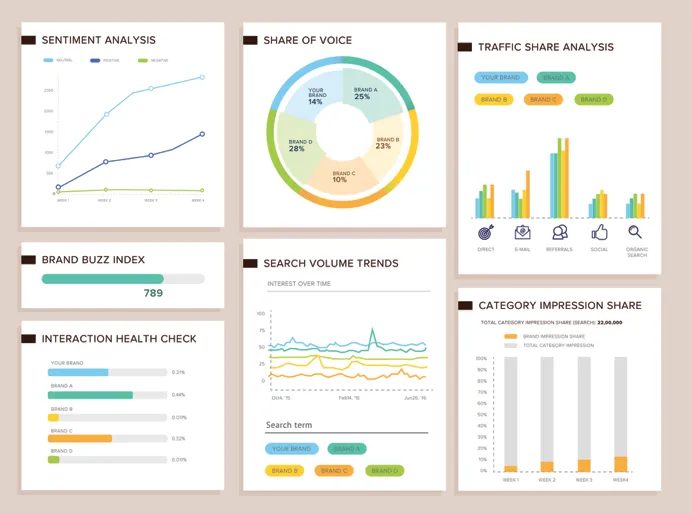
(3) Invest in Dashboard Technology: Measure your KPIs. You will need a be-spoke dashboard using smart widgets that track share of search, product sentiment, audience recency/loyalty & purchase intent etc. You must track Social Presence and Advertising Effectiveness. Conduct an Interaction Health Check. Most importantly split the management view (input vs. output) from the practitioners, so you can demonstrate the ROI of your investments across all stakeholders.
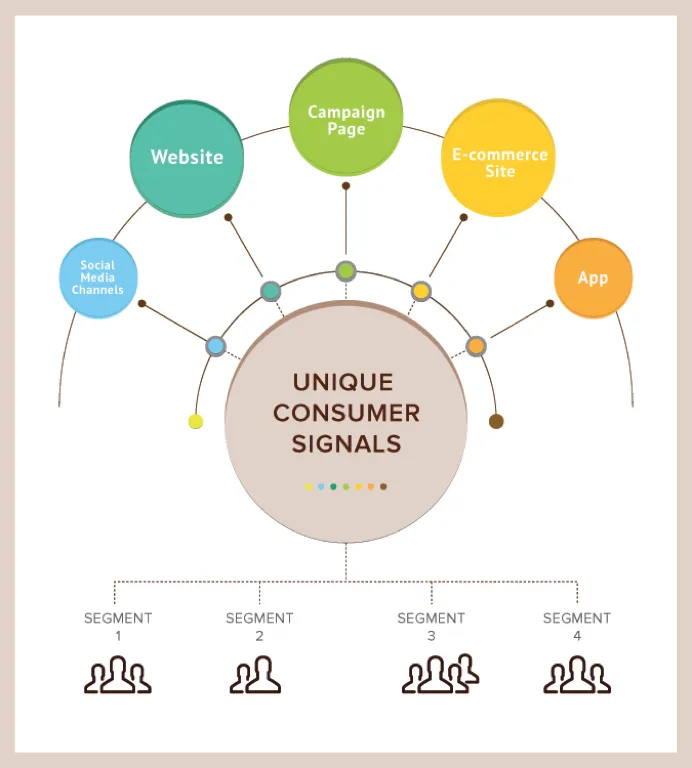
(4) Wire up your assets: For those who have reached a mature state of digital marketing running multiple brand assets (web, social, apps), 2017 will be time to wire them up using consumer-profiling technology. A mature digital business needs to understand consumers better to be able to deliver smarter advertising at the moment(s) of truth. Capturing state of mind of your audience is a crucial departure you can make with programmable advertising.
(5) Understand digital for off-line: Connecting online advertising with offline sales is the next holy grail of accountability and few publishers are doing pioneering work in the area. Experiment with advertising that supports the consumer (ROPO) decision journey instead of banal re-targeting.
(6) Stop spending money in the wrong places and focus on quality. Find the right partner to support your vision and make sure you work out a compensation structure that incentivize your partner to deliver quality.
Hope that is sane advice for 2017 from me and five other blind meant our digital business agency, trying to make sense of the elephant in the room. Like Descartes, I invite you to join me for a cold bath of skepticism, which I find to be wonderfully invigorating.
This article was first published in The Mint on Jan 23, 2017.
First published on Medium on 27 January 2017.